
Getting Started
If you’ve never heard the term “wash day” before, you’re not behind. Most of us weren’t raised with it. Growing up in Nigeria, a lot of us washed our hair whenever it felt dirty, or once every few months, or whenever we took down a style. There’s no shame in that. Nobody sat us down and taught us this.
But if your hair feels dry most of the time, breaks easily, or you’re not sure why it isn’t growing the way you want, wash day might be the missing piece. This guide walks you through exactly what it is, why it matters, and how to build one that actually fits into your life.
So What Actually Is It?
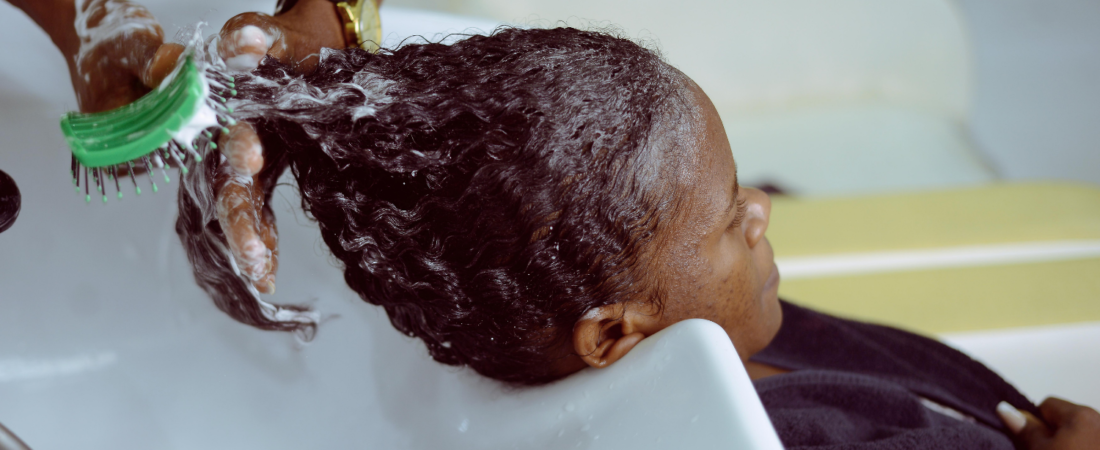
Wash day is a regular, planned routine for cleaning and caring for your hair, usually every one to two weeks. It’s not just “washing your hair.” It’s a full set of steps done together in one sitting: cleansing, conditioning, moisturising, and sometimes a treatment.
Instead of only washing when your hair feels dirty, you’re doing it on a rhythm your scalp and hair can count on. That consistency, more than any single product, is what makes the real difference over time.
Why It Actually Matters
Your scalp is skin. Just like the skin on your face or body, it builds up oil, sweat, product residue and dead skin over time. When you go months without washing, that buildup sits there, blocking your follicles and making it harder for your hair to grow the way it should.
Long gaps between washes are also part of why a lot of us grew up believing our hair “doesn’t grow.” It’s not that it isn’t growing. It’s that the buildup, plus the breakage from tangled, under-moisturised hair, cancels out the growth before you ever get to see it. A consistent wash day removes that buildup regularly and gives your hair the moisture it needs to actually hold onto length.
What a Full Wash Day Actually Looks Like
You don’t need ten products or three hours to do this properly. Here’s each step, and why it matters.
1. Detangle before you add water. Start with dry or lightly oiled hair and gently work through knots with your fingers or a wide-tooth comb, beginning at the ends and working up toward the roots. Detangling wet, unprepped hair is one of the biggest causes of unnecessary breakage.
2. Cleanse your scalp, not just your hair. Focus the shampoo on your scalp, where the actual buildup lives, and let the suds run through the lengths as you rinse. A shampoo that cleanses without stripping your hair bone-dry makes the rest of the process easier.
3. Condition to soften and restore. This step replaces some of what cleansing takes away. Apply from mid-length to ends, where hair is oldest and most in need of it, and give it a few minutes before rinsing.
4. Moisturise while hair is still damp. Products absorb best into damp hair, not soaking wet and not fully dry. This is when a leave-in conditioner does its best work.
5. Seal it in. An oil or butter on top of your leave-in helps lock that moisture in so it doesn’t evaporate out over the following days.
Common Mistakes Beginners Make
Skipping detangling before washing. Wet hair is more fragile, so tangling it further in the shower leads directly to breakage.
Using too much heat. Very hot water can dry out both your scalp and your strands. Lukewarm is kinder to your hair.
Piling on products without a system. More products doesn’t mean better results. A simple four or five step routine done consistently beats ten products used randomly.
Going too long between wash days out of fear of “over-washing.” A buildup-heavy scalp is more likely to hold back growth than a regularly cleansed one.
A Note on Harmattan Season
If you’re in Nigeria, harmattan makes wash day even more important. That dry, dusty wind pulls moisture straight out of your hair and scalp, which is exactly when a lot of people notice more breakage and dryness. Sticking to your wash day rhythm during harmattan, and adding a bit more moisture and sealing than usual, makes a real difference during those months. Some people find they need to moisturise between wash days more frequently too, since the air itself is working against you.
Adjusting Your Routine to Your Hair
Every head of hair is different, so your exact rhythm will need some adjusting. If your scalp tends to get oily fast, you may need to wash weekly. If your hair is drier or you wear protective styles often, every two to three weeks might suit you better. The goal isn’t to copy someone else’s exact routine, it’s to build one your own hair and scalp actually respond well to.
If You’re Just Starting Out
Don’t try to fix everything in one wash day. Pick a rhythm you can actually keep, even if that’s once every two or three weeks to start. A routine you’ll actually stick to beats a “perfect” routine you give up on after two weeks. Give it a few cycles before judging whether it’s working, hair care is slow, and consistency is what compounds over months, not days.
If you’re not sure where to start or what your hair actually needs, our free Hair Analysis asks a few honest questions and gives you a routine built around your actual answers, not a generic one-size-fits-all list.
Written by Winnifred, UK Registered Nurse and founder of Toks Natural.