
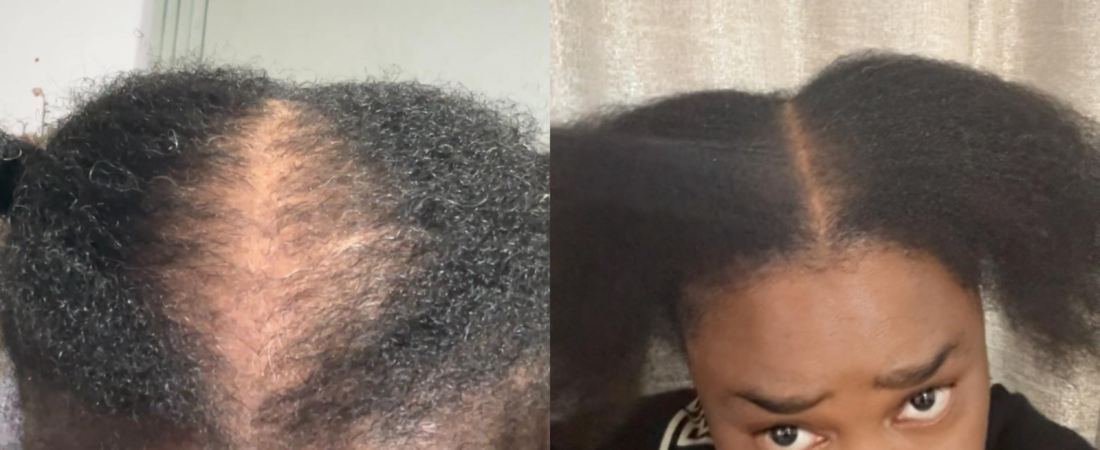
Postpartum Hair Care
If you’ve had a baby and started noticing handfuls of hair coming out in the shower or on your pillow, you’re not imagining it, and you’re not alone. Postpartum shedding is one of the most common things new mothers experience, and it can be genuinely frightening the first time it happens to you.
I know this one personally. My own postpartum shedding got worse after my second son, and it’s part of what led me to formulate Toks Natural in the first place. What I wished someone had told me at the time is everything in this article.
Why It Happens
During pregnancy, higher hormone levels, particularly oestrogen, keep more of your hair in its growing phase for longer than usual. That’s why a lot of women notice thicker, fuller hair while pregnant, hair that would normally have shed on schedule gets held onto instead.
After birth, hormone levels drop back down fairly quickly, and all that extra hair that was “held onto” during pregnancy shifts into its shedding phase at the same time. That’s why it can feel sudden and dramatic. It’s not that something is wrong with you. It’s that months of normal shedding, delayed by pregnancy hormones, are catching up all at once.
How Long Does It Last?
For most women, postpartum shedding starts around three to four months after birth. It typically peaks somewhere in that window and gradually settles down within six to twelve months, as hormone levels regulate back to their pre-pregnancy baseline. It can feel like a long time in the middle of it, especially when you’re also adjusting to life with a newborn, but for most people it does fully resolve on its own.
It’s worth knowing this timeline in advance, because the not-knowing is often what makes it feel scarier than it needs to. If you can expect the shedding, notice it starting to ease by month six to nine, that expectation itself makes it easier to get through.
What Can Help During This Time
- Be gentle with your hair. This is not the time for tight styles or rough detangling. Handle it the way you’d handle anything fragile, because right now, it genuinely is more fragile.
- Keep your scalp cared for. A clean, well-supported scalp gives new growth the best environment to come back in once the shedding phase passes.
- Support yourself nutritionally. Rest and a balanced diet matter more than any product during this stage. Postpartum recovery asks a lot of your body, and hair health often reflects overall wellbeing.
- Simplify your routine. You’re already stretched thin as a new mother. A simple, low-effort routine you can actually keep up with beats an elaborate one you’ll abandon after two weeks.
- Give it time. This is the hardest part, but most postpartum shedding is temporary, not permanent hair loss.
A Word on the Emotional Side
Nobody really prepares you for how unsettling it feels to watch your hair come out in your hands during a season when you’re already dealing with so much change. It’s okay to find this hard. It doesn’t mean you’re overreacting, and it doesn’t mean something is deeply wrong. Give yourself the same patience you’d give a friend going through the same thing.
A scalp-focused oil, used consistently, can be a genuinely supportive part of your routine during this time, though it won’t stop the hormonal process itself, nothing topical will. What it can do is support a healthier scalp environment for when your hair naturally shifts back into its growing phase. Our Growth Revive Herbal Hair Oil was actually born out of exactly this experience.
Common Myths Worth Clearing Up
“Breastfeeding causes hair loss.” It’s the hormone drop after birth, not breastfeeding itself, that’s the main driver. Many bottle-feeding mothers experience the same shedding pattern.
“If it doesn’t stop by six months, something’s wrong.” For some women it can take up to a year to fully settle, and that’s still within a normal range.
“You need special products to fix it.” Gentle, consistent care matters far more than any specific product line. This is a hormonal process working itself out, not a deficiency that needs correcting.
When to Talk to a Doctor
If shedding continues well past twelve months, feels unusually severe, or comes with other symptoms like fatigue, unexplained weight changes, or changes in your cycle, it’s worth speaking to your doctor. Postpartum shedding is common, but it’s still worth ruling out anything else going on, like a thyroid change, which can also affect hair after pregnancy and needs separate attention.
Whatever stage you’re in, be patient with yourself. Your body just did something enormous, and your hair catching up is a normal part of that, not a sign that something is broken.
Written by Winnifred, UK Registered Nurse and founder of Toks Natural.