
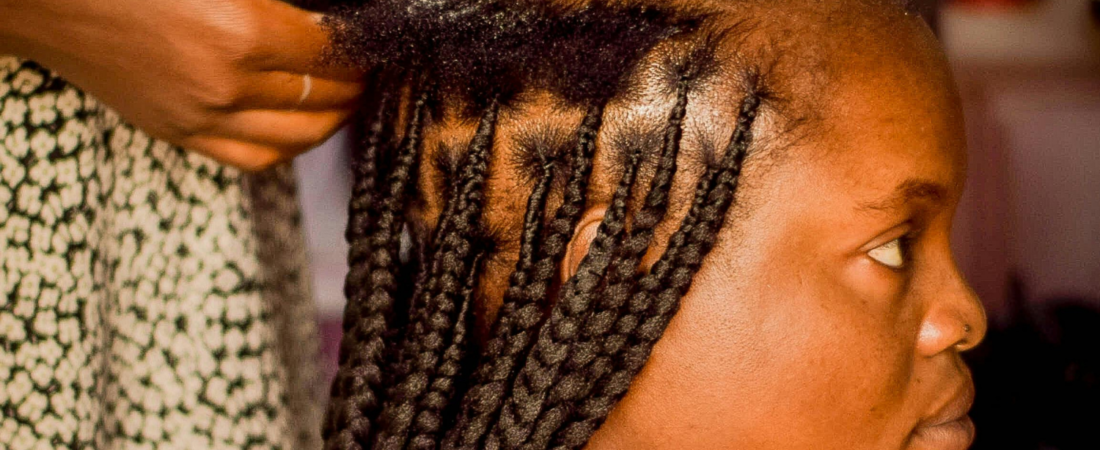
Protective Styles
Braids, wigs, cornrows and weaves are part of everyday life for a lot of Nigerian women, and they’re called “protective styles” for a reason. Done right, they can give your natural hair a real break and help you retain length. But not every style is actually protecting you. Some are quietly working against you, especially the ones tightly done for a “laid” look.
The Warning Sign Most People Ignore
Tension at your hairline is not something you should just push through. Pain, tightness, or headaches right after getting a style installed is your scalp telling you something is wrong, not a sign the style is “laid” or “done properly.” A lot of us were taught to associate pain with a good install. That’s actually backwards.
Repeated tension on the same hair follicles over time can lead to a condition called traction alopecia, gradual hair loss caused by constant pulling, usually starting at the edges and temples. It develops slowly, which is exactly why it’s easy to miss until the damage is already visible. By the time thinning is obvious, the tension has usually been happening for months or years.
Signs Your Protective Style Isn’t So Protective
- Pain or tightness that doesn’t ease up a few hours after installation
- Small bumps or irritation along the hairline
- Noticeable thinning at the edges after taking the style down
- Your natural hair feels dry or brittle underneath by the time you take it out
- You’re leaving the same style in for months without checking on your scalp underneath
- Small white bumps forming at the root, a sign of follicle stress
Which Styles Carry the Most Risk
Not all protective styles put the same amount of stress on your edges. Very small, tight box braids and tight ponytails or buns pull the most consistently on the hairline. Micro braids and tight cornrows done in intricate patterns can also concentrate tension in specific spots. Looser styles, like larger braids, twists, or a properly fitted wig with a comfortable band, generally put far less strain on the hairline.
This doesn’t mean you have to avoid the styles you love. It means paying closer attention to how tightly they’re installed and how your scalp actually feels once it’s done.
How to Actually Protect Your Hair
- Ask for it looser at the edges. A style can still look neat without pulling at your hairline. If it hurts, say something before it’s finished, not after you’ve already sat for three hours.
- Moisturise underneath, not just on top. Your natural hair still needs care while it’s tucked away, not just the visible braids or twists.
- Don’t leave a style in indefinitely. Most protective styles are meant to last a matter of weeks, not months on end. The longer it stays in, the more buildup and tension accumulate underneath.
- Give your edges recovery time between styles. If your hairline feels stressed, a few weeks without tension at the roots makes a real difference before your next install.
- Support your scalp between styles. Gentle massage and a scalp-focused oil can help support recovery once a style comes out.
- Choose your stylist carefully. A stylist who checks in about tension during installation, rather than just working quickly, is worth the extra time.
What Recovery Actually Looks Like
If you’ve noticed early thinning at your edges, the good news is that traction alopecia caught early is often reversible, since the follicle itself isn’t necessarily destroyed, it’s just stressed. Recovery usually means reducing tension at the affected area for an extended period, sometimes several months, alongside consistent scalp care.
Our Growth Revive Herbal Hair Oil is a good option to bring back into your routine once a protective style comes down, to help support the scalp during that recovery window. If thinning is more advanced or hasn’t improved after a few months of tension-free care, it’s worth speaking to a dermatologist, since prolonged, severe traction alopecia can in some cases cause permanent follicle damage.
The Bottom Line
A protective style should protect your hair, not slowly wear it down. If something hurts, trust that. Your edges are worth more than one more week of a style that’s stressing them out, and a good stylist will always understand that.
Written by Winnifred, UK Registered Nurse and founder of Toks Natural.