Hair Basics
You’ve probably heard the word “porosity” thrown around in hair videos or product descriptions, usually without anyone actually explaining what it means. If you’ve ever felt lost when someone says “this is great for low porosity hair” and you have no idea if that’s you, this one’s for you. Understanding porosity matters even more for coily, kinky and curly African hair textures, since it directly affects how well products and moisture actually work for you.
What Porosity Actually Means
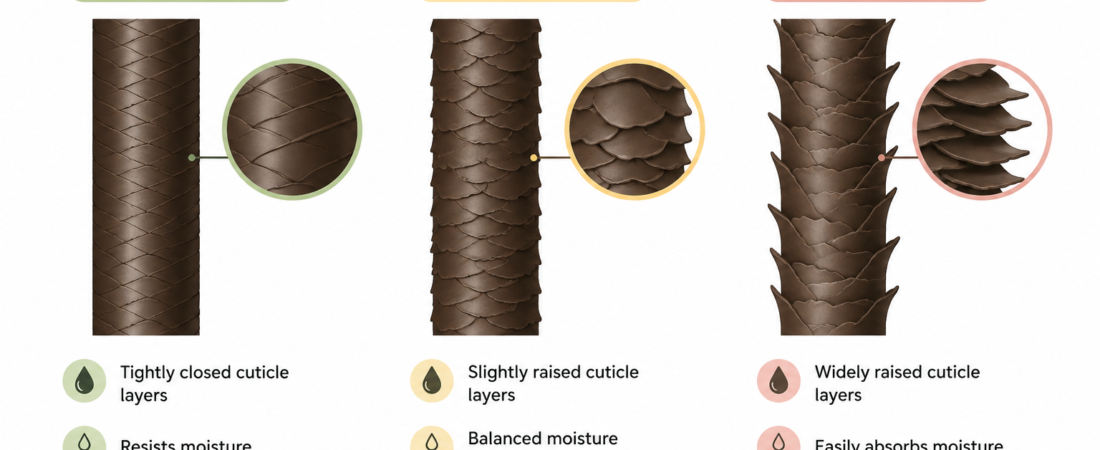
Porosity is simply how easily your hair takes in and holds onto moisture. Think of each strand of hair as having tiny scale-like layers on the outside, called the cuticle. How open or closed those layers sit determines your porosity.
- Low porosity: the cuticle sits tightly closed. Water and products struggle to get in, so hair can take a long time to get fully wet, and products tend to sit on top instead of soaking in.
- Normal porosity: the cuticle is moderately open. Moisture goes in reasonably well and doesn’t escape too fast either. This is often considered the easiest porosity to manage.
- High porosity: the cuticle is quite open, sometimes from natural texture, sometimes from damage like heat or chemical processing. Hair absorbs moisture fast, but loses it just as fast.
Can Your Porosity Change Over Time?
Yes, and this surprises a lot of people. While there’s a genetic baseline to your porosity, things like heat styling, chemical treatments, and even sun exposure can raise your porosity over time by lifting and roughening the cuticle. This is why hair that’s been relaxed or coloured often behaves differently, and needs different care, than it did before that processing happened.
Why This Actually Matters for You
Knowing your porosity changes how you approach your whole routine, not just which products you buy:
- If you have low porosity hair, heat during deep conditioning (like a steamer cap) can genuinely help products absorb instead of just sitting on the surface. Lighter, water-based products also tend to work better than heavy butters that just sit on top.
- If you have high porosity hair, sealing with an oil after moisturising helps lock that moisture in before it escapes again. Protein treatments can also help temporarily smooth a rough, overly open cuticle.
- If you’re not sure, that’s completely normal. Most people have never been taught this, and it’s not something you can tell just by looking at your hair.
A Simple Way to Get a Sense of Yours
Take a clean strand of hair (one that’s fallen out naturally, not pulled) and drop it into a glass of water.
- If it floats for a while before slowly sinking, that often points to low porosity.
- If it sinks fairly quickly, that often points to high porosity.
- If it floats in the middle for a while before slowly drifting down, that often points to normal porosity.
This test isn’t perfectly scientific, hair oils and residue can affect how it behaves, but it can give you a useful starting point, alongside how your hair actually behaves day to day.
Other Everyday Clues
Beyond the float test, pay attention to how your hair behaves during normal wash days:
- Does your hair take a long time to get fully wet in the shower? That leans low porosity.
- Does product seem to sit on top of your hair rather than soak in, even hours later? That also leans low porosity.
- Does your hair dry very quickly after washing, sometimes within an hour? That leans high porosity.
- Does your hair feel dry again within a day of moisturising, even though you sealed it? That also leans high porosity.
Common Mistakes People Make Once They Know Their Porosity
Knowing your porosity is only useful if you actually apply it. A common mistake is low porosity hair being weighed down with heavy butters that never absorb, leaving hair looking greasy without ever feeling moisturised. On the flip side, high porosity hair often gets under-sealed, moisturised well but left without an oil on top, so all that effort evaporates within hours.
Still Not Sure?
You don’t have to figure this out alone. Our free Hair Analysis walks you through a few simple questions, explains porosity in plain language as you go, and gives you product recommendations based on your actual answers, not a guess.
Written by Winnifred, UK Registered Nurse and founder of Toks Natural.